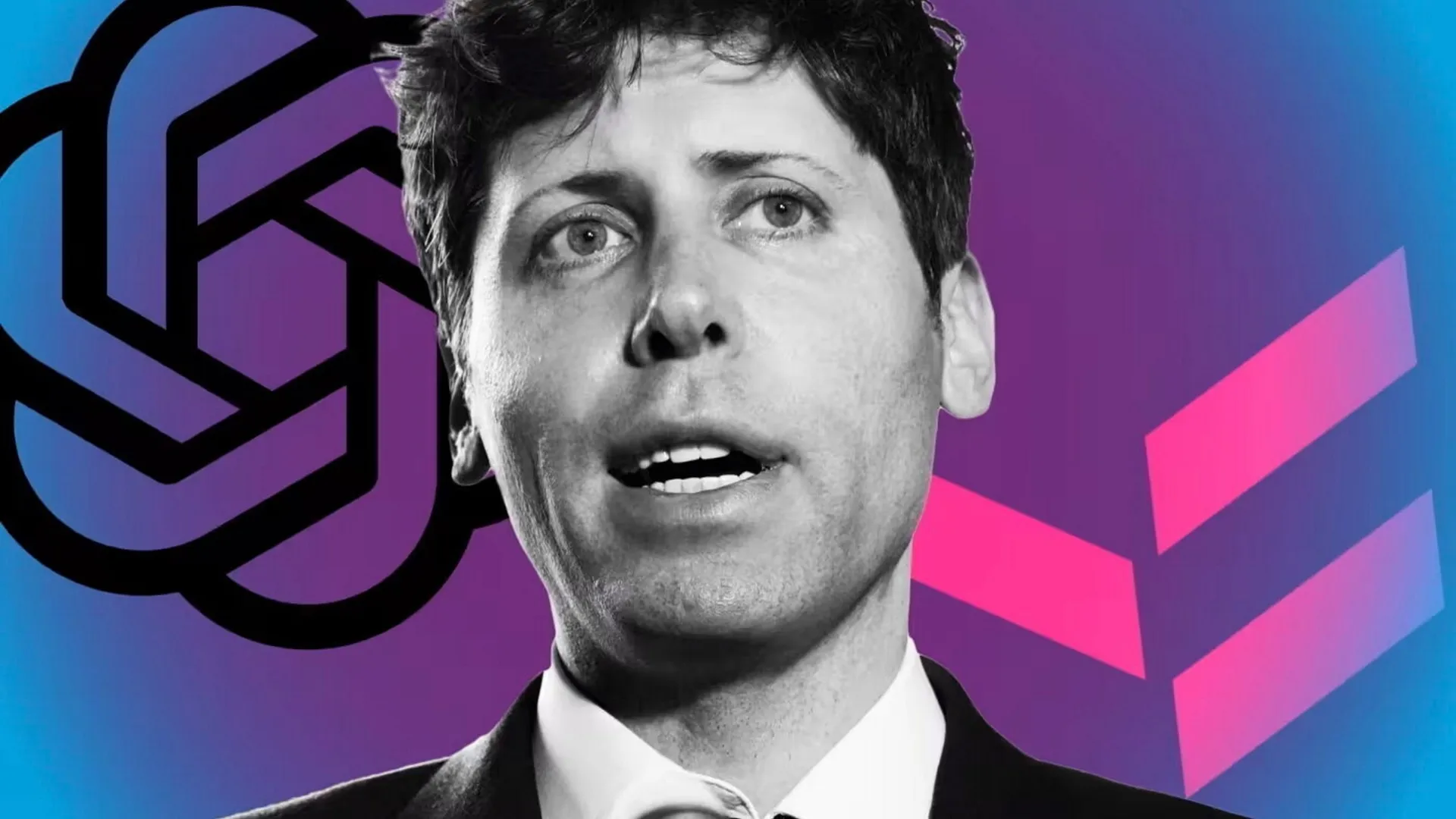
Microsoft chief executive Satya Nadella expressed a common view in the tech industry when he said recently that large language models, the engines behind the generative AI boom, are becoming “more of a commodity”.
With a handful of leading model-builders vying for bragging rights with each new iteration of their AI, it is becoming hard to separate OpenAI’s latest GPT from Anthropic’s Claude or Google’s Gemini.
That makes it all the more notable that Nadella’s Microsoft has just lined up behind OpenAI’s latest funding round, boosting its valuation to $150bn. Will this moment be looked back on as the peak of generative AI mania?
Valuing any fast-growing tech company in a new market is notoriously difficult. But the extent to which generative AI has transformed the tech landscape and the speed of OpenAI’s emergence have left investors groping for yardsticks and historical comparisons.
First, consider what it has built. ChatGPT, launched nearly two years ago, became a hit consumer brand almost overnight and now claims 250mn users a week. The $20 monthly subscription fee paid by a small minority has lifted its annualised revenue to $3.6bn.
OpenAI could also be on the way to becoming a wider tech platform. Many other companies have integrated its AI into their own products and services. The tools it is building to make its technology more useful in the business world have given it a rare opening in the enterprise market.
It is tempting to draw parallels with earlier hot start-ups, such as Google. When the search company’s stock market value first hit $150bn, in 2006, it was not the clear winner in search that it went on to become, with less than half the market. Its $10bn in revenue that year was similar to the $11bn OpenAI is reported to project for next year.
But it is here that the comparisons break down, and the scale of the challenge ahead for OpenAI becomes more apparent. Google was already churning out cash in 2006. OpenAI, without a functional business model, is on track to burn through more than $5bn of cash this year, with little prospect of stemming the flow in the short term.
Along with the sharply escalating expense of training ever-larger models, the considerable computing power needed to respond to users’ prompts will continue to weigh heavily on margins as it grows. Nor does it seem to be able to use pricing as a weapon. Although it has brought down prices rapidly to match greater efficiencies in responding to queries, the costs of querying for other LLMs that are available through the main cloud services have fallen pretty much in parallel.
That points to OpenAI’s biggest challenge: the lack of deep moats around its business, and the intense competition it faces.
On the consumer side, Meta said last week that 500mn people are now looking at its Meta.AI at least once a month, a sign of the vast, captive markets available to OpenAI’s Big Tech rivals. Google and Meta also have ready-made advertising businesses, which have proved to be the best route to monetising large-scale digital audiences.
ChatGPT can point to a favoured position on the iPhone, thanks to a deal with Apple. But Apple is only making the chatbot available through its Siri assistant, and even then only for handling questions that are beyond the current capabilities of its own AI models — hardly a recipe for long-term success as OpenAI tries to cement its early consumer gains.
Competition on the enterprise side is also growing fast. Close ally Microsoft is diversifying away from its early reliance on OpenAI, while the capabilities of open source AI models have advanced rapidly, making them viable alternatives. Meta’s Llama hasn’t yet become “the Linux of AI”, as Mark Zuckerberg suggested last week, but the risk of commodification that Nadella warned about looms large.
At this point, it is worth remembering that generative AI is still in its infancy, and that the vast resources being poured into the technology could still hold big surprises and bring considerable unanticipated disruption.
OpenAI’s latest models hint at the potential. Its voice-powered GPT-4o has been credited with breaking new ground in naturalistic voice interaction, potentially opening up new consumer markets to AI. And it claims its GPT-o1 is the first model capable of breaking a complex problem down and reasoning its way to a solution. That could point to a future where AI models themselves take on more of the work in a business application, sucking value out of traditional software as they become more central to working life.
It is impossible to tell how far capabilities like these will advance and whether OpenAI can maintain a meaningful edge in model-building. But with the most powerful companies in tech closing fast, investors backing the group at $150bn will need a strong stomach.
richard.waters@ft.com