Last week, just an hour before I had to leave my apartment for the airport, I was still frantically packing. It was a short trip with a full schedule, but I spent about 10 minutes deciding which of the three books I was reading to take with me. I knew it was unlikely I’d have time to turn more than a few pages, but it never occurred to me to not take at least one book.
Reading has always been such an important part of my life that I can easily forget what a privilege it is, a luxury even, not only to be able to read but to have access to so many books across different genres and subject matter. When I stop to think about the value of reading, it strikes me that maybe it’s a luxury we can’t afford to not take advantage of, however busy our lives might be. I don’t think we can overestimate the role that reading plays in shaping our lives, especially when what we read invites us to reflect on unfamiliar stories and perspectives, those we have yet to make room for in our imagination, alongside the familiar.
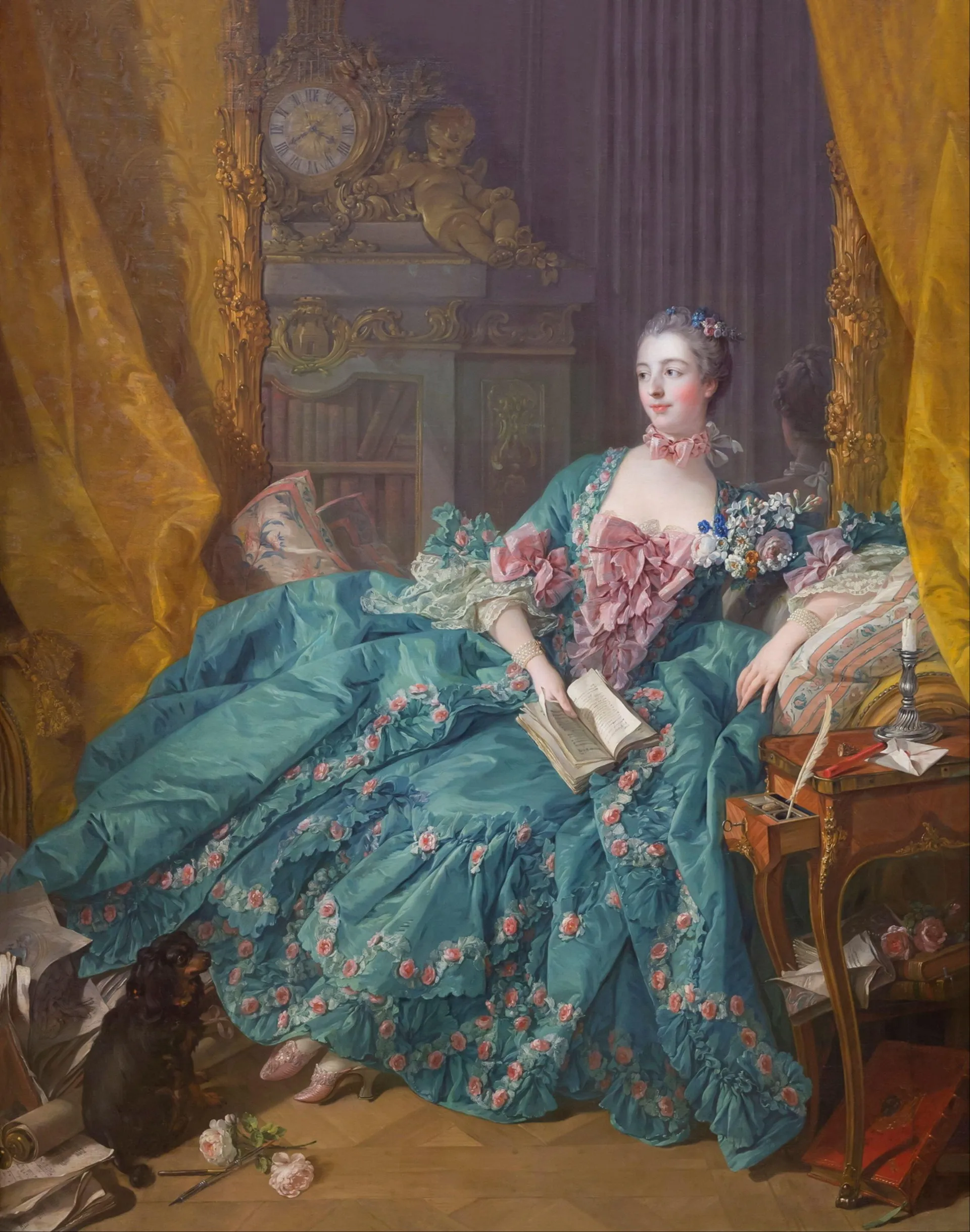
I love François Boucher’s 1756 painting of Madame de Pompadour, which is housed in the Alte Pinakothek in Munich. Gold curtains are pulled back as though to reveal Pompadour, mistress of the French king Louis XV, lounging on her chaise, centre stage. Her dress is almost a character in its own right, and seems to take over the canvas, yet her figure is in no way diminished. Behind her is an ornate bookcase with full shelves. An obedient dog sits at her feet, beside strewn flowers on the floor. A side table is arranged in the foreground of the painting, with its drawer open to reveal an inkwell and quill, while on the shelf beneath, books pile up and spill over. Placed right at the centre of Madame de Pompadour’s body is an open book, which she holds in her hand.
We know that literacy grew significantly throughout 18th-century Europe, and that reading material became more widespread, available to people beyond the clergy and nobility. But books remained expensive, and reading, even for well-to-do women, was considered a luxurious pastime. Moreover, in France at this time, the state had tight control of reading materials.
This painting, in some beautiful way, suggests that reading can feel like returning home, and can offer a deep sense of nourishment
Although I am more than aware that few of Pompadour’s contemporaries enjoyed the luxury of books, what I love about this painting is how it places reading on a par with fine jewels or clothes as something worth aspiring to. Pompadour’s head is held high, as though reflecting for a moment on the contents of the book, and I like to imagine that in the privacy of her room she has managed to get a hold of whatever it is she wants to read, regardless of royal censorship.
It’s easy to forget that the reason why reading was controlled in the past, and is still controlled under some regimes today, is because people understand that books reveal a multiplicity of worlds. They show us the many different ways that a life can be caged or free. They offer us powerful access to knowledge, which can in turn expand our sense of agency. And once people have a sense of agency, almost anything seems possible. Besides the sheer pleasure of it, I have always recognised my access to books as a form of power. I learn how to do new things or how to approach different seasons or experiences in life. Reading invites me to contemplate both more expansive and intentional ways of being in the world.
The 1886 painting “Marie-Madeleine au Desert”, by the 19th-century French painter Emmanuel Benner, is on view at the Strasbourg Museum of Modern and Contemporary Art. It shows a naked young woman draped on a blue cloth, engrossed in reading a large folio manuscript. She is alone in cave-like surroundings, yet she appears unafraid. The woman is supposed to be Mary Magdalene, known through the New Testament Gospel narratives as a devout follower of Jesus of Nazareth. Some believe her to have been wealthy and a financial supporter of Jesus’s ministry. Others believe she was a woman of ill repute. Regardless of interpretation, I love the reframing of her here as a reflective, literate woman, seemingly undisturbed by the opinions and perspectives of the outside world.
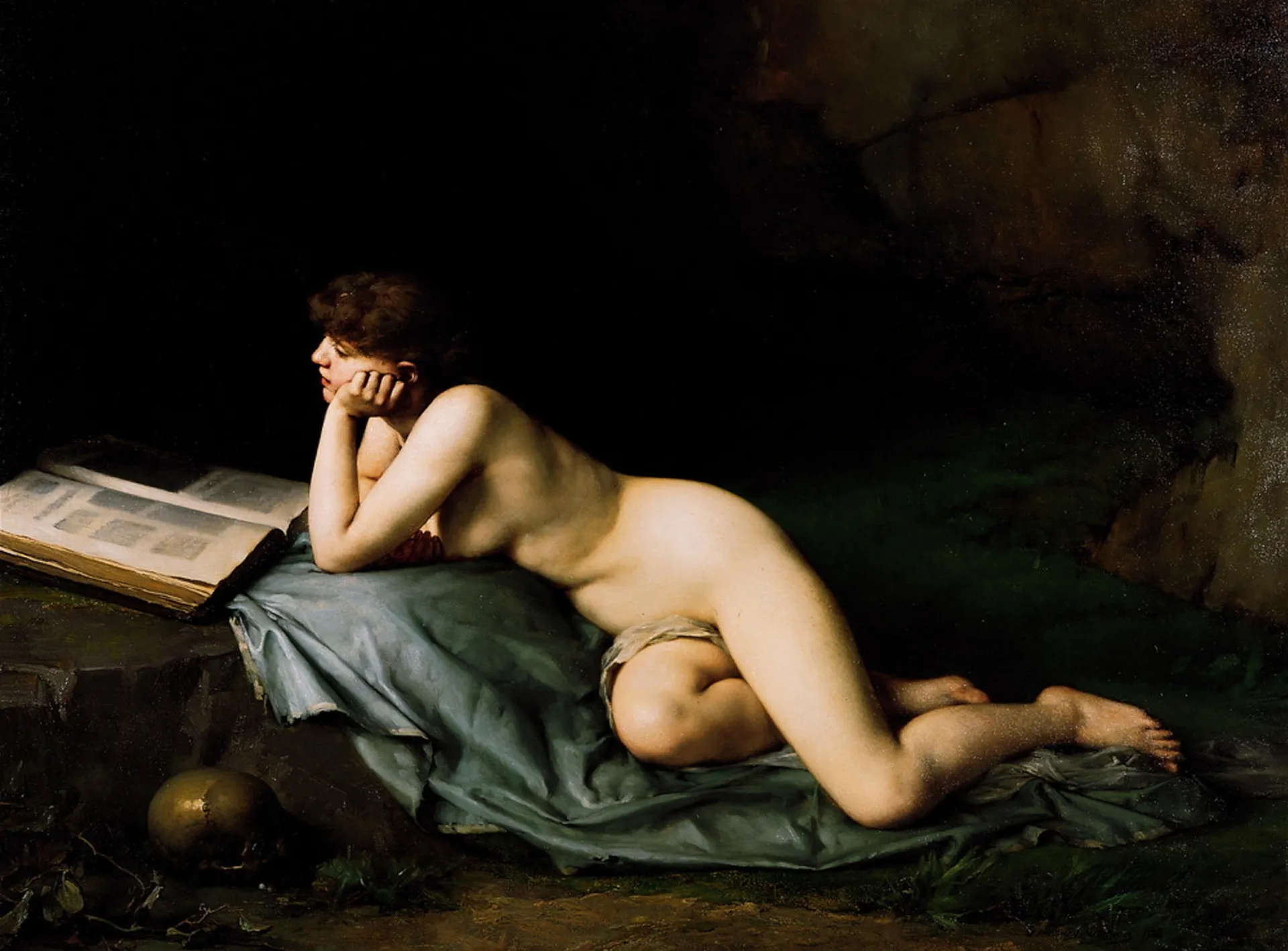
Reading is such a significant part of my vocational life, and I think about the hours I can and often do spend on a weekend afternoon immersed in a book without thinking about anything else. The book can almost become a place of habitation. And this painting, in some beautiful way, suggests to me that reading can feel like returning home, and can offer a deep sense of nourishment. There is also the fact of Mary Magdalene’s nakedness, which I choose to see as symbolic of the exposure and vulnerability that any of us can bring to a text, a sense of openness to learning and to listening that can foster a dialogue with the author. Her posture implies that this exposure is not a threat, it’s not dangerous. Rather, that when we read with openness, we expose ourselves willingly to the possibility of being encountered ourselves.
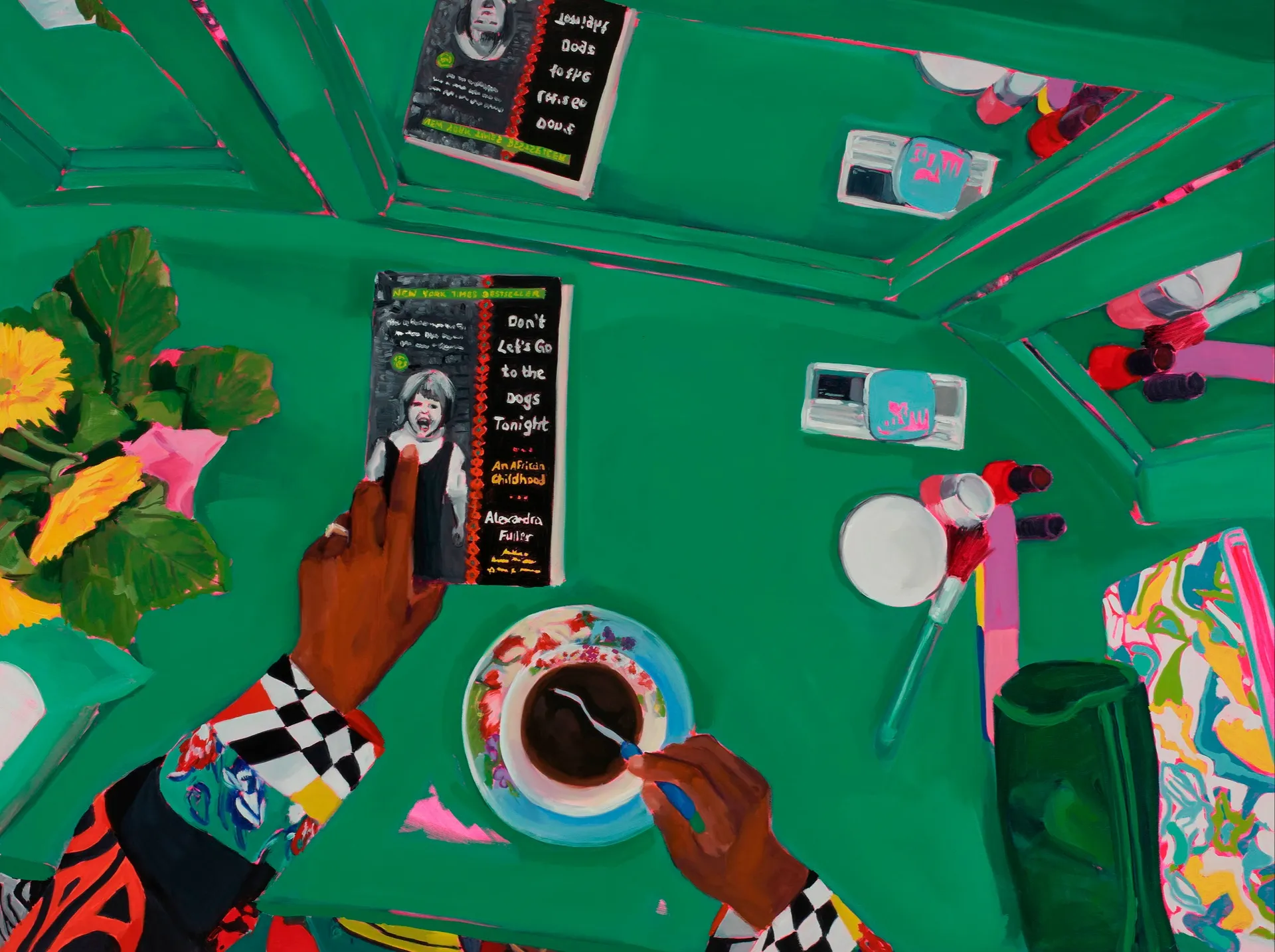
I am regularly drawn to the work of contemporary Kenyan artist Wangari Mathenge. Her 2021 painting “The Ascendants XIX (Her Things Are Here)” gives an overview of a green table with cosmetic items, make-up bags and flowers arranged on its surface. We also see a pair of women’s hands with slim fingers. The right hand stirs a cup of coffee and the left cradles a book, the thumb serving as a place marker.
It seems such a simple, commonplace scene. But what I like so much about this work is its sense of perspective. As we look from above we are given an intimate view of a small slice of this woman’s life. Perhaps we’ve caught her getting ready in the morning, grabbing just a few minutes to read a couple of pages of the book she can’t keep away from. And we see the book’s cover clearly enough to know that she’s reading Don’t Let’s Go to the Dogs Tonight, a striking and unforgettable memoir by Alexandra Fuller, about her chaotic upbringing in Rhodesia during the country’s civil war. Its inclusion is an interesting choice for Mathenge, who lives and works between African and western countries, and perhaps points to the ongoing ways in which a woman negotiates her relationship with writing, identity and place.
I love that the artist lets us read the title of the book. It is almost an invitation for us to look for it ourselves in our own lives, and to spur our own thoughts, even if they may come into conflict with what we read. This, for me, highlights the value of reading as something that can open up ways to engage with stories vastly different from our own, and at the same time let others into the more intimate spaces of our lives, as with this painting. How many of us have been in a conversation in which we are either asked or we ask the other, “Are you reading anything you’d recommend?” or “What was the last book you read?” We love to hear about the books that other people read because they tell us something about who those people are, their interests and what excites them. There’s the hope that we might find something in common with one another. And the hope that we might find something new and interesting that might inspire our own lives.