Whatever Ridley Scott is on, it should be added to the water. A lot has been said — not all of it kind — about the veteran director’s recent films. His work ethic, though, is unimpeachable. Between The Last Duel, House of Gucci, Napoleon and now Gladiator II, Scott has spent his 80s making back-to-back epics with the collective running time of a long-haul flight, and serious turbulence en route.
Some of those movies have been really very bad. Yet Scott’s stubborn charm is that you still never know what is coming next, or what form he’ll be on, just that the result will have been made with belligerent swagger. “Are you not entertained?” demanded the first Gladiator back in 2000. With Ridley Scott the answer, even buried in caveats, is generally yes. So it proves again with the sequel.
On form or off, power has always been a favourite theme for the director. Throw in the original film’s enduring popularity, and all roads were going to lead back to Rome eventually. Twenty-four years have passed since Gladiator, but with Scott keeping time, the sequel actually opens 16 after the first film, in which Russell Crowe’s Maximus Decimus Meridius went from general to rebel.
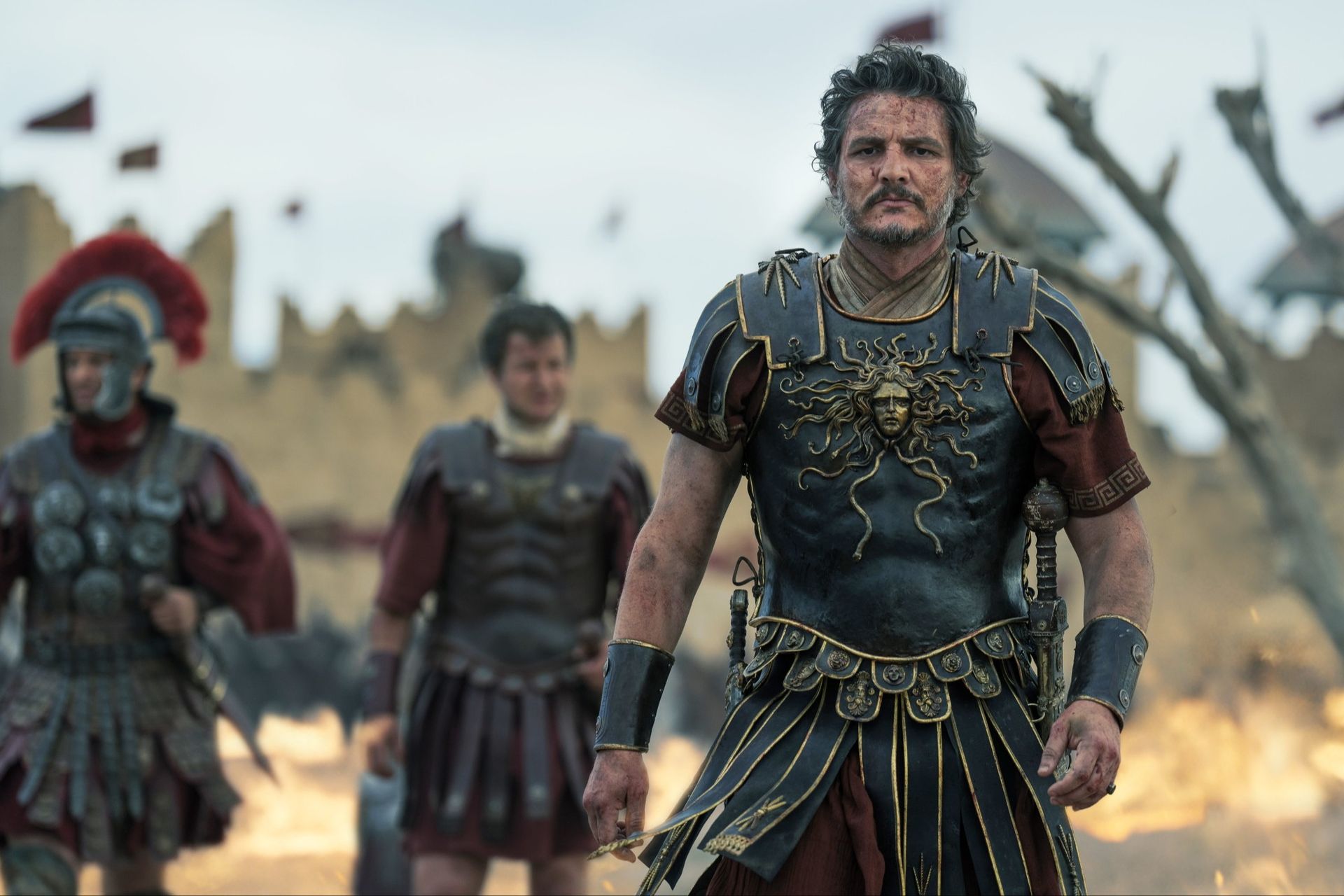
Here the empire is defied from the start, with Paul Mescal as a foundling star of the resisting Numidian army. (Historical sticklers are only going to upset themselves.) Roman commander Marcus Acacius (Pedro Pascal) rains down flame on the “last free city in Africa”. By the end of the battle, the story is scaffolded. Despite his valour, our hero is now a captured slave with a genius for violence. Cue the Colosseum.
Mescal has built his career on a string of roles as sensitive young men in poignant dramas. Normal People and All of Us Strangers never asked him, as Scott does, to throttle a baboon. “It is an art, choosing gladiators,” announces Denzel Washington as Roman insider Macrinus, speaking, you sense, both for himself and a movie with a certain dry self-awareness. “Rage pours out of you like milk,” he smiles.
Sorry. Milk? Self-aware only up to a point, it turns out. Writer David Scarpa tries a lot of one-liners, but the hit rate is not high. The actual drama can be choppier still. Mescal’s reinvention as action hero turns out to be relatively simple. Delivering a plausible response to the story’s clunkier plotting makes killer monkeys look like child’s play.
Still, his presence is less puffed-up than Crowe’s, and his character’s link to the first film is neatly revealed. (Though I might have been having a bad night. Failing to see the twist coming, my notes from the screening read: “All new story unrelated to . . . oh”.)
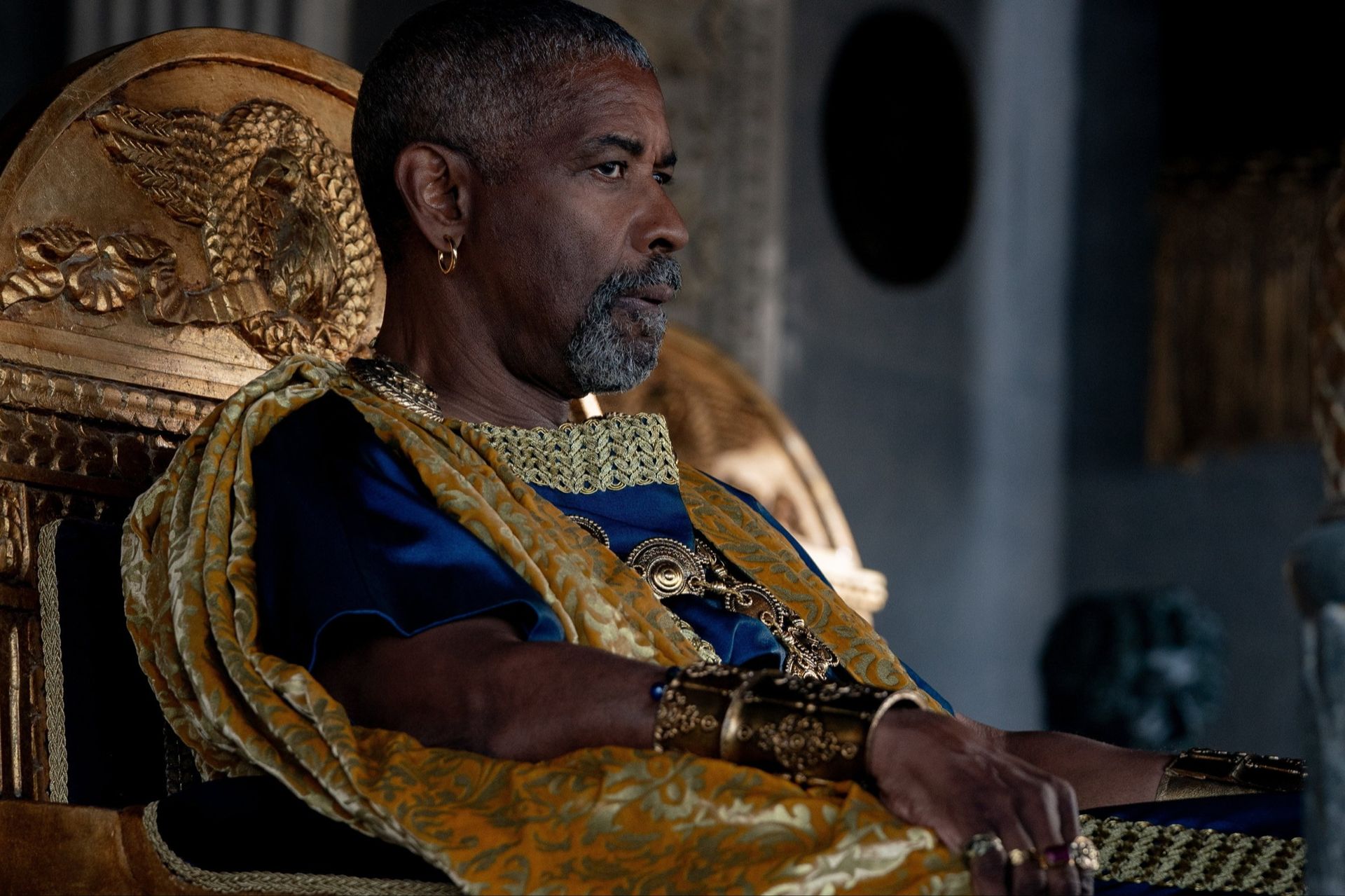
Scott just keeps on trucking either way. The best of the film is its sheer bloody-minded heft, a blockbuster fuelled by an insistence on bigger, sillier, movie-r. There are crazy set-pieces and Machiavellian intrigue. Again, the film comes to mirror its characters. For twin emperors Geta and Caracalla (Joseph Quinn and Fred Hechinger), cranking up the barbarism of the Colosseum is their own survival tactic.
The same goes for Scott. The solemn pomp of the first movie is only half-restored. I’d be amazed if the sequel is remembered by Christmas, let alone in 24 years. But the ideas are more pulpy and loopy, and the film more fun for it. “What we do in life echoes in eternity,” Gladiator intoned. Have some of that, says Gladiator II.
That runs to crunching violence and more zoological mayhem. Meanwhile, the queasy spirit of Joaquin Phoenix’s Commodus is doubled by the flouncing decadents played by Quinn and Hechinger. All is now imperial rot. “This city is diseased,” Mescal says, sounding more like the star of a sequel to Taxi Driver.
Watching Gladiator II, you recall how long ago 2000 was — a time before 9/11, Facebook, or the financial crisis, let alone more recent convulsions. Then, an American epic could still tell a simple tale of classical heroism. Now Hollywood is all but kaput, and any story of ancient Rome feels fated, like this one, to feel loaded by the moment, filled with references to a dying “Roman Dream”.
Francis Ford Coppola too recently connected the modern US with the same point of history in his barmy Megalopolis. Scott instead gives us the kind of giant B-movie only he can make, with all the attendant potholes and pleasures, and a sly last word. Beware the thrill of watching savagery, the film suggests. The show never ends well.
In UK cinemas from November 15 and US cinemas from November 22