When Elon Musk finally closed his $44bn deal to buy Twitter in October 2022, despite months of trying to wriggle out of the plump contract as markets slumped, he displayed no remorse. “Fuck Zuck!” he shouted as he signed the papers with a flourish, in a machismo challenge to the Meta boss Mark Zuckerberg, now his direct competitor in the dog-eat-dog world of social media.
It was a provocative — and fitting — start to what would become one of the most dramatic overhauls in corporate culture to date. Within weeks, the mercurial Musk set about sacking or losing more than 80 per cent of Twitter’s staff of 7,500 and replacing its meandering, overly bureaucratic management with his “hardcore”, up-all-night working dogma, all in the hopes of ushering a new era of “free speech”.
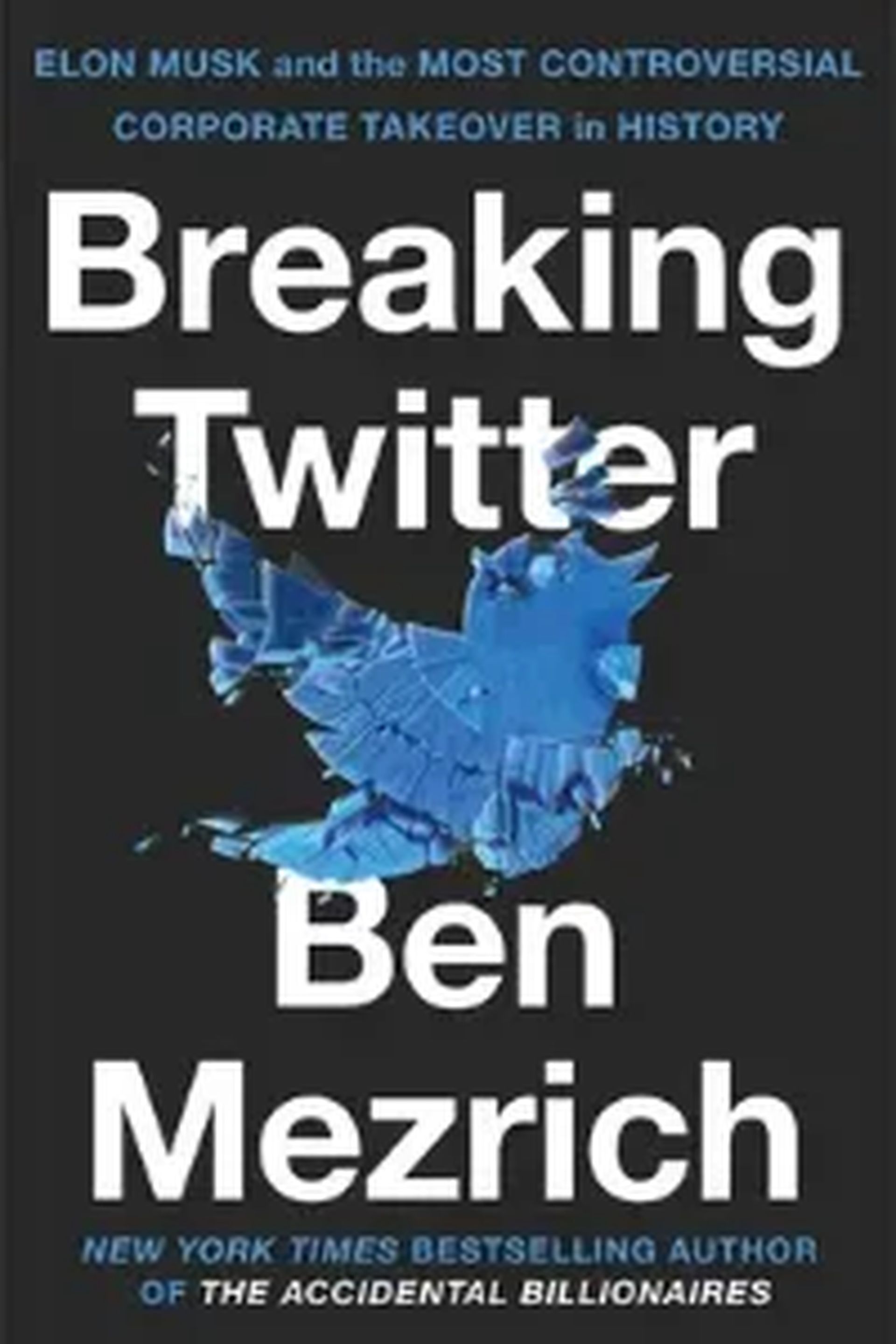
But in doing so, Musk didn’t just “break” Twitter — “Twitter broke Elon Musk”, argues Ben Mezrich. In Breaking Twitter, the bestselling American author chronicles the lead-up to and first chaotic months of the billionaire’s takeover of the social media platform, attempting to get inside Musk’s head as he seemingly unravels at the helm.
Mezrich — best known for his narrative non-fiction works such as The Accidental Billionaires, about the founding of Facebook — does this by interweaving the first-person narratives of a handful of mid- to high-level staffers, with chapters from Musk’s imagined vantage point. It is a dramatisation, much of which has already been published, rather than a feat of deep access and dogged reporting.
It’s unclear how much creative licence Mezrich has taken. In a note to readers, he explains that some scenes have been re-created and dialogue ‘reimagined’
Early into the acquisition, Musk is impish and gleeful, even when events are not going in his favour. When his grand plan to open “blue tick” verification to all users leads to swaths of impersonations on the platform — some humorous, some malicious — Musk is seen by one of his senior staffers “laughing, sometimes uproariously, as he scrolled from tweet to tweet”.
But we also see flashes of a darker side: Musk as the paranoid, thin-skinned leader who loathes betrayal. He becomes increasingly challenged, begins to spiral and flexes his power in response. When his toddler son is the victim of a stalking incident, Musk lashes out by expelling certain journalists from the platform.
When US President Joe Biden gets more engagement than him on a tweet about the Super Bowl, Musk has a spectacular tantrum. When Twitter users vote in favour of him stepping down as chief executive in a poll that he himself posts, a sullen Musk hides away in his office for so long that staffers outside discuss whether to call the police to ask for a wellness check on him. At its heart, Breaking Twitter illustrates the dangers of ego and perpetuating a culture of fear.
By journalistic standards, it is unclear exactly how much creative licence Mezrich has taken. In a note to readers ahead of the prologue, the author explains that some scenes have been re-created, dialogue “reimagined”, satire employed, even composite characters created. Narrative presented in Musk’s voice is “based on my own speculation as well as deep reporting”, Mezrich states.
Either way, the goal is clear. The book reads as though written with a screenplay pitch in mind, rushed out ahead of the half-dozen or so other Twitter/Musk books that are incoming and just after Walter Isaacson’s all-access biography. Overly cinematic and overwritten, it is largely structured around scenes of vivid action, even those only loosely connected to the Twitter tale.
While the pitch clearly worked — news of a limited series based on the book circulated recently — it is unsatisfying for those searching for the bigger picture. There is little consideration of what Twitter (since renamed X) was, could or should be, or the philosophical questions thrown up by the takeover — for example around the merits or challenges of shareholder primacy.
The closest access, and most compelling narrative, is the tale of one staffer’s attempt to upwardly manage an increasingly unmanageable Musk. Esther Crawford is a product manager who divided opinion as either a symbol of sycophancy or “hustle culture” when she was photographed in a sleeping bag on the floor of the Twitter offices shortly after the deal closed.
In Mezrich’s telling, she immediately curries Musk’s favour, leapfrogging her colleagues to a senior position by charming him and even offering to share a pre-prepared list of who he should keep close and not fire.
Crawford justifies this opportunism by insisting that it is “her calling” to guide Musk away from impulsive decisions towards sensible ones. Initially she is successful. But by the end of the tale, even her Silicon Valley self-belief cannot compete with Musk’s moods. She, like all Musk staffers, is disposable and eventually fired. But stealing the show, it is Crawford who gets the last word. At the end of the day, Musk is, she concludes, “the saddest, loneliest man she’d ever met”.
Breaking Twitter: Elon Musk and the Most Controversial Corporate Takeover in History, by Ben Mezrich, Pan Macmillan £22/Grand Central Publishing $30, 352 pages
Hannah Murphy is an FT technology correspondent
Join our online book group on Facebook at FT Books Café