Nepal will mark the rapid melting of a crucial glacier with a “funeral” next week as scientists warn that climate change threatens thousands of other ice sheets across the world.
Buddhist monks, scientists, government officials and community figures will take part in a ceremony on Monday at the Yala glacier, one of the most studied and measured ice bodies in the Hindu Kush Himalaya region, which is now considered critically endangered.
So-called glacier funerals have been held in Iceland, Mexico and Switzerland in recent years, but Monday’s service is the first in the Hindu Kush Himalayan region, which holds the third largest volume of ice on Earth after the two polar geographic zones.
The transformation of Yala from “white glacier” to “rocky with debris” was “incredibly sad”, said Sharad Prasad Joshi, cryosphere analyst at the International Centre for Integrated Mountain Development and Nepal’s national correspondent for the World Glacier Monitoring Service.
The ceremony comes as scientists warn of a rapid acceleration in the melting of land glaciers, with huge implications. Glacier melt drives sea level rises and intensifies climate change, because of the loss of ice that reflects rather than absorbs sunlight. Flooding and later drought risks can also rise.
Fabien Maussion, an expert in past glacier changes and their future projections, estimated that more than 1,000 glaciers are disappearing worldwide each year, many of them unnamed and not widely studied.
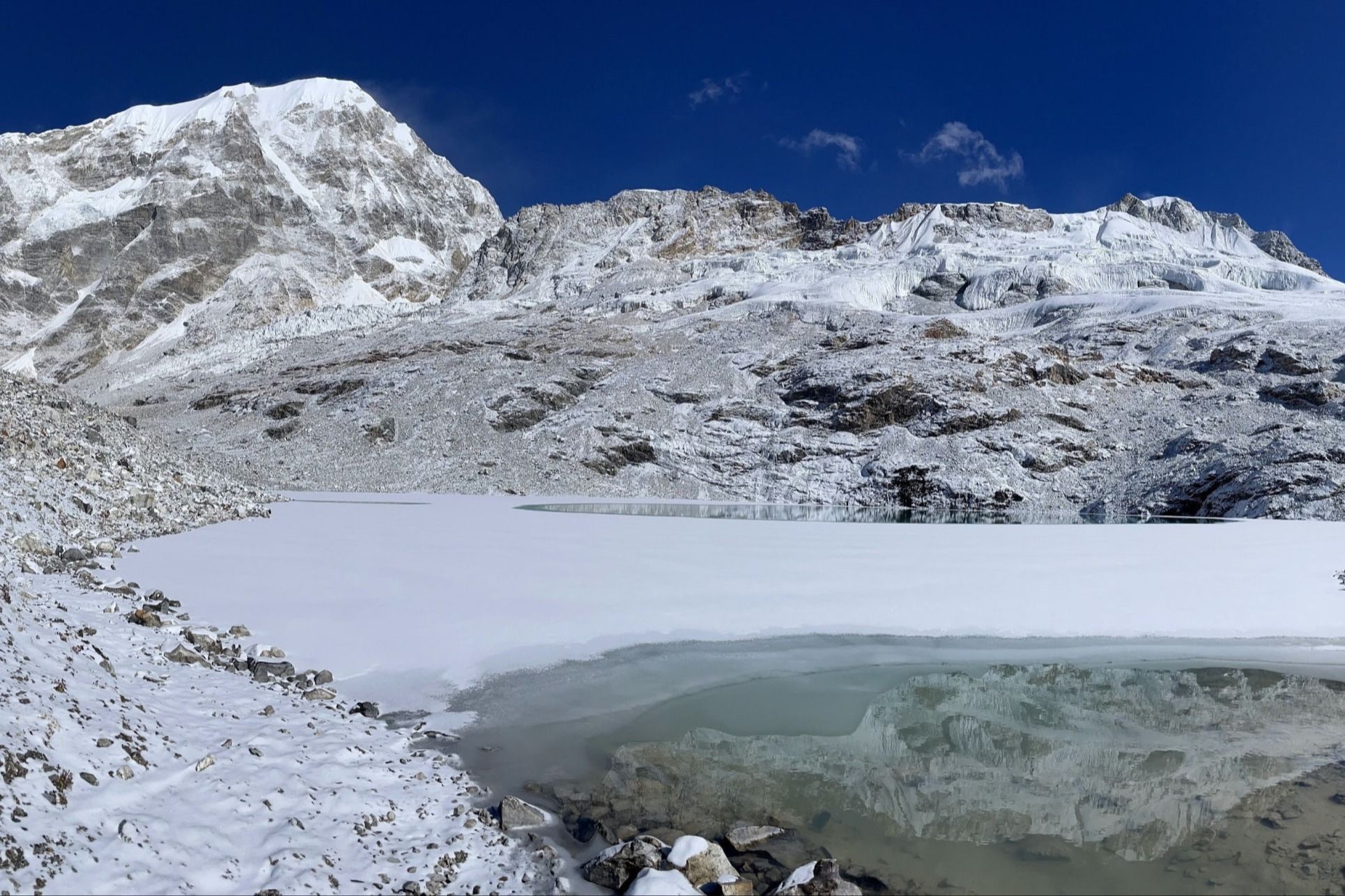
The Yala glacier in 2023 . . .
Sharad Joshi/ICIMOD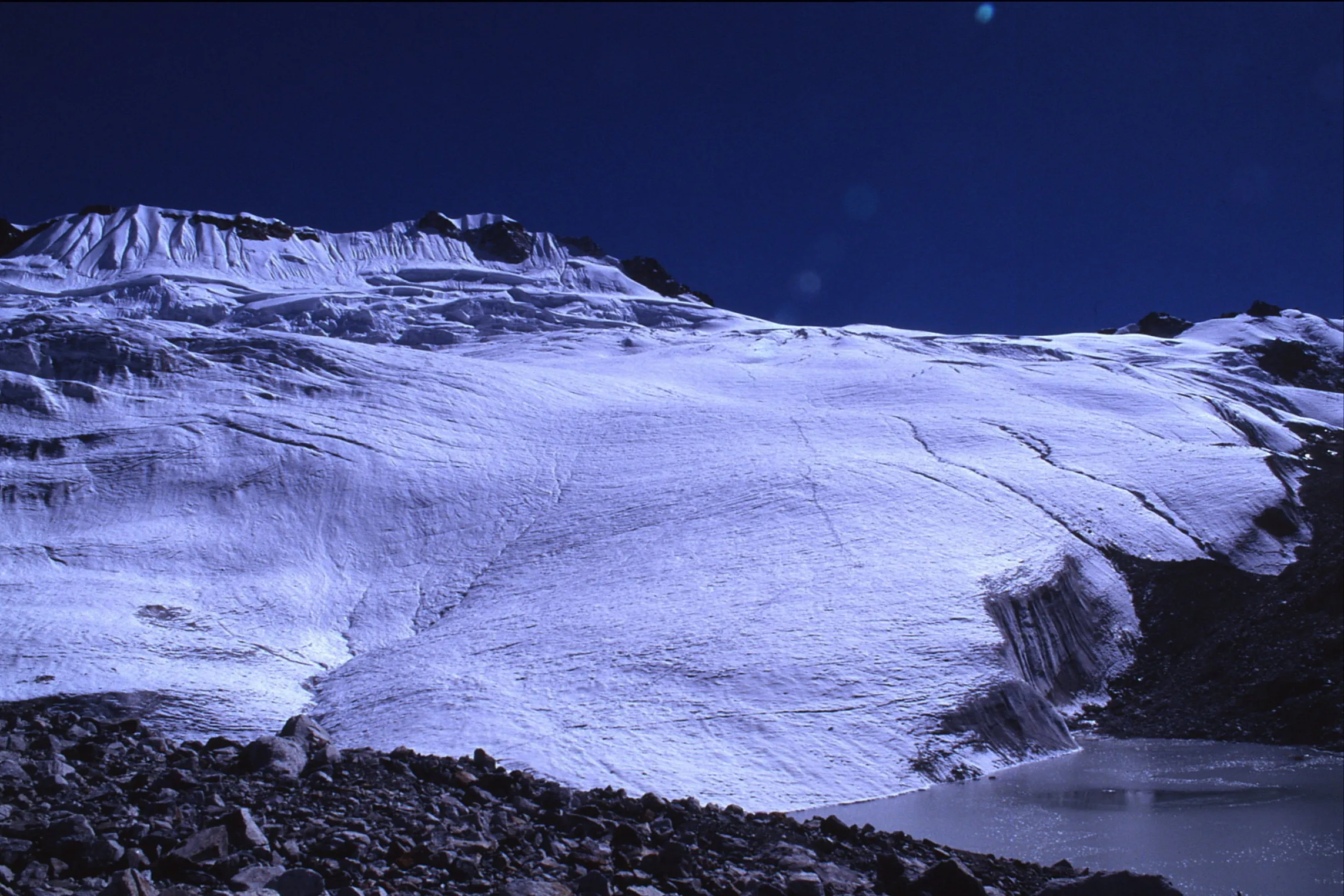
and in 1980
Koji Fujita/Nagoya University“We know glaciers are melting. But they are not just getting smaller and smaller, they are starting to disappear,” said Miriam Jackson, a cryosphere scientist, who has worked on the Yala glacier.
Last year, Venezuela became one of the first countries in modern history to lose all of its glaciers. Some modelling suggests Germany’s glaciers will disappear within a few years.
Cymene Howe, an anthropologist at Rice university who was part of the team that organised the first glacier funeral, in Iceland, said: “They are dying . . . It is a fundamental loss.”
Glaciers are typically considered “dead” when the ice becomes so thin through melting that they no longer move beneath their own weight.
While Yala is expected to entirely disappear by around 2040, there was a question about whether the glacier was “already dead”, said Jackson, who is a research scientist for the Norwegian government and the Eurasia and Nordic director for the International Cryosphere Climate Initiative (ICCI).
“You could argue that Yala is not really a glacier any more. It has shrunk so much it is not deforming under its own weight any more . . . You can see bits of ice there that are pretty much stagnant and melting,” she said.
Most scientists focus on ice mass loss rather than the number of glaciers fading, given that as a glacier melts it can in effect become several different bodies of ice.
Research this year found about 273bn tonnes of ice had disappeared each year on average since 2000 — the equivalent to 30 years of water consumption by the world’s population.
Between a quarter and 80 per cent of glacier mass is expected to be lost by the end of the century, depending on efforts to cut greenhouse gas emissions and reduce the global temperature rise.

“A portion of this loss is already locked in [because of existing climate change], but if we rapidly lower emissions, we can save many other [glaciers],” said James Kirkham, chief science adviser at ICCI.
Shyam Saran, India’s former special envoy for climate change, said the “pace and scale of deglaciation and loss of snowpack” happening across the Himalayas “which I’ve seen with my own eyes, is truly breathtaking”.
“This has major implications for this region’s prosperity, and not just food, water, and energy security, but national security too,” he warned.
This year, snow levels in the Hindu Kush Himalaya region hit a 23-year low, threatening the water supplies of two billion people.
Joshi said the retreat of Yala and other glaciers has “huge implications”, including triggering further temperature rise, because of the loss of reflectivity and “implications for water, livelihoods, and more downstream”.
Yala had played a crucial role in training researchers in a region where “our capacity to monitor and therefore predict and act on what is happening” to glaciers lags far behind other areas of the world, added Joshi. He has visited Yala 26 times and trained about 100 scientists from Afghanistan, Pakistan, China, India and Nepal there.

Fewer than 40 of the 54,000 glaciers in the mountain ranges that stretch from Afghanistan to Myanmar are regularly monitored. The Yala glacier is often the first that trainee glaciologists in the region step foot on, because it is considered more accessible. Even so, visiting the glacier requires a day’s drive from Kathmandu plus four days of walking.
On Monday, watched by about 50 people, two memorial plaques carved in Nepali granite will be installed at the base of Yala, featuring words from Icelandic and Nepali authors Andri Snær Magnason and Manjushree Thapa.
Magnason’s message to future readers says: “We know what is happening and what needs to be done. Only you know if we did it.”